

Event Lighting Hire for Outdoor and Corporate Shows
Event lighting hire made easy: designing impactful looks for outdoor and corporate shows
Late-summer festivals and autumn conferences need lighting that copes with shifting daylight, weather, and tight show schedules. The right plan makes your stage look intentional, your speakers look confident, and your brand look polished.
LSS Live combines industry-leading lighting hire with an experienced engineering team, so creative ideas are backed by safe rigging, robust power, and precise cueing. Whether you are building a village green stage or an awards dinner, we help you land the look and run on time.
How to build a lighting plan
Start with outcomes. Who needs to see what, from where, and on camera as well as in the room? Translate that into positions and fixture types, then into power, data, and rigging.
Map the stage and audience. Mark presenter zones, performance areas, lecterns, set pieces, screens, and camera positions.
Define the three-point base: key, fill, and backlight for faces. Layer in colour and effects once faces are clean.
Choose fixtures by job: washes for coverage, profiles for crisp key and gobos, beams for air looks, pixel bars for scenic lines and chases.
Lock colour temperature for cameras. For conferences and awards, 3200 K to 4000 K often flatters skin tones while staying friendly to video. Match cameras and screens, then build colour accents around that base.
Specify control and cues early. Decide what is busked and what is timecoded. Share a cue list with stage management so VT rolls, stings, and walk-ons hit exactly.
Our programmers produce clear lighting plots and patch sheets, so load-in stays efficient and changeovers are predictable.
The three types of lighting, done right
For faces and clarity:
Key light: the primary, slightly off-axis source that shapes the face. Use profiles with shutters to avoid spill on screens and set.
Fill light: softer coverage that reduces shadows without flattening. Wide washes or diffused front fills work well.
Backlight: separation from the background for depth and definition. Helps cameras and makes award photos pop.
These elements are the backbone of corporate shows, panels, and presenters on festival stages.
Fixture choices that earn their keep
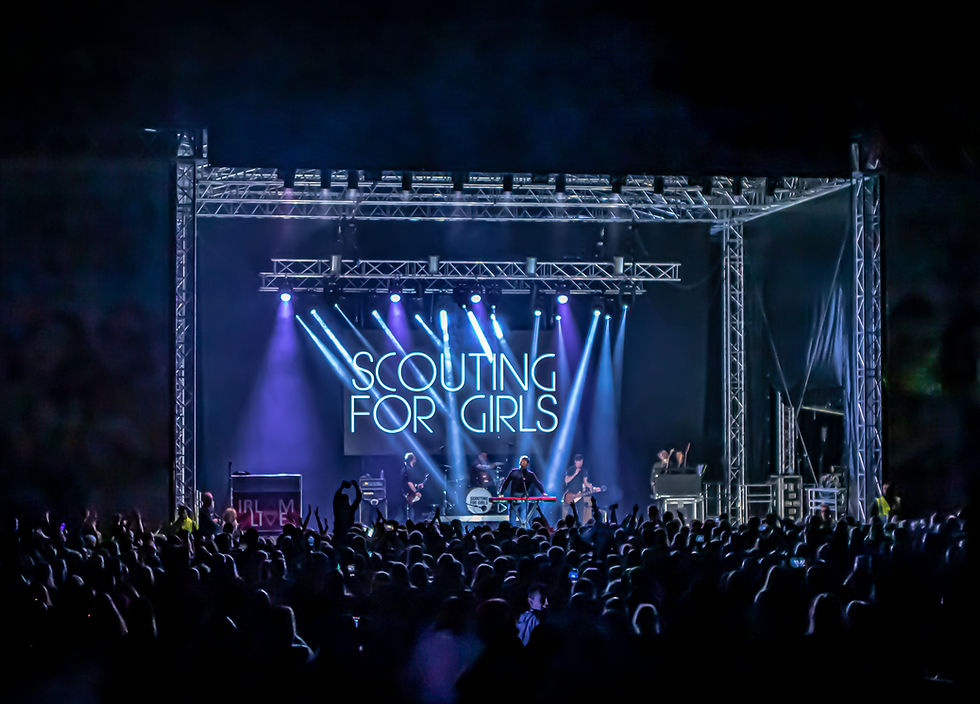
Wash fixtures: broad, even coverage for stages and scenic pieces. Ideal for open-air where daylight is changing.
Profile fixtures: shuttered key light, crisp gobos for texture, and clean logo projection without hitting the screen.
Beam fixtures: mid-air looks for music moments, stings, and impact. Use sparingly for conferences, more liberally for festival nights.
Pixel bars and blinders: build dynamic lines, accents, audience sweeps, and layered chases that track music or stings.
For outdoor lighting hire, pick IP-rated fixtures for exposed positions. IP65 or better resists showering rain and dust, keeping shows running when the weather turns.
Power distribution, DMX, and network control
Lighting only shines if power and data are rock solid. LSS Live’s engineers coordinate power provision with venue teams and generator suppliers, then design clean signal paths.
Power: calculate total loads with headroom, balance phases, protect with RCDs, and separate audio and lighting feeds to reduce noise. Label everything to speed fault finding.
DMX: run home-run universes or a trunk with opto-splits, keep runs short where possible, and terminate. Use spare lines for resilience.
Network: for large rigs, Art-Net or sACN simplifies distribution to stage left, stage right, and set elements. Use managed switches, VLANs where appropriate, and keep a documented IP plan.
Redundancy: backup console or tracking network for high-profile moments like award reveals and product launches.
Rigging safety and compliance
Safe rigging underpins every look. Our expert engineers lead site recces, produce RAMS, oversee temporary works and ballast, and manage the full build, inspection, and sign-off. On outdoor stages, check UDL and point loads against the roof spec, validate wind limits with and without walls, and plan load paths before you arrive. Indoors, confirm venue beam ratings and approved pick points, then show total weight per point on the plan.
Cable management matters too. Use tidy looms, bridged crossings, and strain relief at fixtures. Keep escape routes clear, and brief stage management before rehearsal so everyone knows the safe zones.
Colour temperature, cameras, and consistency
For corporate events with IMAG and livestream, choose a consistent white point, then stick to it. Gel or program profiles to the chosen Kelvin, and lock white balance on cameras. Keep LED wall brightness balanced with key light to avoid washed faces. Save saturated colour moves for transitions, stings, and entertainment segments so speeches remain legible and on-brand.
Cueing, timecode, and show flow
Awards and product launches benefit from precise punctuation. We build a cue stack that follows the script: stings for category call, specials for winner walk-up, soft looks for acceptance, then back to the host. Timecode can trigger complex chases, video rolls, and SFX in sync, while operators keep a manual layer for human timing. This balance delivers consistent repeats across rehearsals and show calls.
Sample lighting packages
Small outdoor stage, late-summer set:
6 to 8 profiles for front key across three performance zones
8 to 12 IP-rated washes for stage and scenic colour
4 beams for night-time lift and stings
Pixel bars on risers for lines and chases
IP-rated distro, DMX with opto-splits, and a compact console
Gala dinner and awards:
Tight front-key system with shuttered profiles for lectern and host walk area
Soft fill washes for tables without glare
Backlight and two followspots for winners
Pixel bars and discreet uplights to trace the set
Pre-built cue stack with award stings and winner specials
Conference breakout room:
4 to 6 profiles for panel key and lectern
Warm fill wash and subtle backlight for depth on camera
Simple pixel accents on set pieces
Quiet distro, tidy DMX run, and a compact desk with showfile presets
For joined-up delivery, pair lighting with appropriate av production and stage hire so coverage, sightlines, and power are aligned.
What a lighting designer does
A lighting designer interprets the brief, venue, and schedule, then turns them into a plot, looks, and cues. They choose fixture types and positions, define key, fill, and backlight, shape colour and texture, coordinate power and data with engineers, and work with programmers to build a reliable showfile. Onsite, they focus and refine, then call or operate cues with stage management.
Common AV problems and how to avoid them
Spill on screens or set: use profiles with shutters and careful angles.
Faces too cold or too warm on camera: agree a Kelvin target and keep it consistent.
Flicker or data loss: use quality DMX, correct termination, and robust network switches.
Power trips: calculate headroom, balance phases, and separate audio and lighting.
Glare into audience: tilt and soften fills, and test sightlines from key seats.
Our team coordinates lighting and sound from advance to show, which reduces these issues before doors.
Lighting and sound together
Impact comes from both picture and sound. We combine lighting hire with sound hire so speech stays clear and music feels full while the stage reads well on camera and in the room. Responsibilities typically include system design, FOH operation, monitor support, DMX control, programming, and cue calling. For integrated delivery, explore our event production services.
Quick FAQ
How do you make a lighting plan? Start with audience needs and camera, map key zones, build key-fill-backlight, pick fixtures by job, then specify power, DMX or network, and cues.
What are the 3 types of lighting? Key, fill, and backlight for clean faces and depth.
What does a lighting designer do? Translates the brief into a plot, fixture choices, and cues, aligns with engineers on power and rigging, and refines looks onsite.
What are the elements of lighting design? Visibility, form, colour, movement, balance, and consistency for camera.
What are common AV problems? Spill on screens, inconsistent colour temperature, data glitches, power trips, glare; plan angles, Kelvin, DMX, and power properly to avoid them.
Why LSS Live
Depth of inventory across profiles, washes, beams, and pixel kit for outdoor and corporate shows
Precision cues for awards and launches, with programmers who build repeatable showfiles
Expert engineers who manage recces, RAMS, temporary works, and sign-off for safe, efficient delivery
If you need joined-up lighting design with staging and power, LSS Live can support your timeline and budget discussions with clear options.
Summary
Late-summer festivals and autumn conferences succeed when lighting is clean on faces, consistent on camera, weather-ready outside, and precisely cued. Build from key, fill, and backlight, choose fixtures by job, protect power and data, and keep safety central. LSS Live’s inventory, programmers, and engineering oversight help you deliver confident shows. Request a site recce and specification sheet to see plots, cue stacks, and power schedules for your event.


Comments